
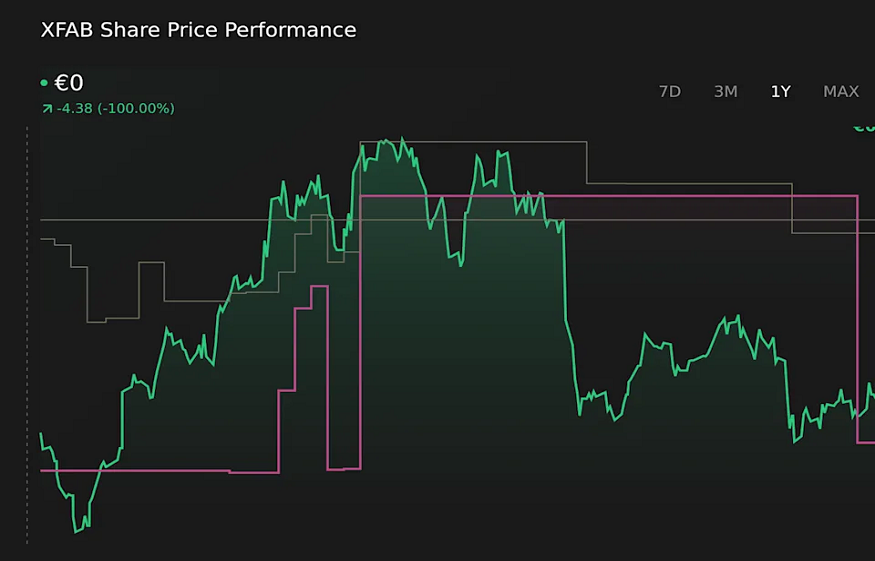
Europe’s defence landscape is changing quickly. Governments that spent years emphasising efficiency, modernisation, and reduced military expenditure are now reassessing how much capacity is needed to protect national interests and meet alliance commitments. This shift is creating a different operating environment for defence manufacturers, where demand is increasingly shaped by long-term procurement programs rather than short-term replacement cycles. For investors and industry observers, the key question is not simply whether defence spending is rising, but how effectively individual companies can convert that spending into orders, revenue, and sustainable cash flow.
Saab AB sits within this broader European transformation. The Swedish defence group operates across areas including fighter aircraft, surveillance, weapons systems, sensors, and electronic warfare. Its position in several strategically important markets gives it exposure to the region’s modernisation efforts. However, rising defence budgets alone do not guarantee attractive investment outcomes. Investors also need to examine order growth, backlog quality, production capacity, margins, cash generation, and the valuation already reflected in the company’s share price.
Europe’s Defence Reinvestment Creates a Longer Demand Cycle
European defence procurement has historically been influenced by political priorities, fiscal constraints, and lengthy acquisition processes. The security environment has encouraged governments to reconsider those assumptions. Countries across Europe are increasing attention on air defence, ammunition production, combat aircraft, drones, surveillance, electronic warfare, and other capabilities designed to address increasingly complex security requirements. NATO’s spending framework and national modernisation plans are also influencing procurement decisions, creating a potentially more sustained demand environment for established defence suppliers.
Read More : Do Branded Ear Plugs Increase Brand Recognition?
For manufacturers, the important distinction is between announced spending and actual orders. Defence budgets can increase without immediately translating into contracts because procurement programs require negotiations, technical evaluations, parliamentary approvals, and production planning. Once major contracts are signed, however, they can create multi-year revenue visibility. This makes order intake and backlog particularly important indicators when assessing companies operating in the sector.
Saab’s diversified portfolio gives it exposure to several of these procurement themes. The company’s international customer base can also reduce dependence on any single national procurement cycle. Investors should remember that large defence contracts can create substantial execution requirements, particularly when several programs expand simultaneously.
Order Growth Provides an Early Signal of Business Momentum
Revenue tells investors what a company has already delivered, while orders provide a window into potential future activity. In defence, that distinction is especially important because contracts often extend over many years. A period of strong order intake can therefore indicate that future production requirements are expanding, although the timing of revenue recognition depends on delivery schedules and contract structures.
Backlog visibility can also help management plan manufacturing capacity, research spending, recruitment, and supply-chain commitments. For investors analysing Saab, monitoring the relationship between new orders and revenue is useful. If order intake consistently exceeds annual sales, backlog can expand, potentially strengthening future revenue visibility. But a large backlog should not automatically be interpreted as equivalent to near-term cash flow because delivery schedules, costs, contract terms, and working-capital requirements can vary significantly between programs.
This is where Saab stock becomes particularly interesting from an analytical perspective. The investment case depends not only on whether Saab wins more contracts, but also on how efficiently those contracts are executed. Investors can examine order growth alongside organic sales growth, operating margins, free cash flow, capital expenditure, and backlog composition. Looking at several measures together provides a more balanced picture than relying on headline contract announcements alone.
Production Capacity Could Become a Strategic Advantage
Growing defence demand creates an unusual challenge for manufacturers: winning contracts is only one part of the equation. Companies must also have the factories, skilled employees, suppliers, engineering resources, and production systems necessary to deliver equipment on schedule. The European defence industry has faced supply-chain constraints and capacity limitations in various areas, making manufacturing expansion increasingly important.
For Saab, increased demand can create opportunities to scale production and improve the utilisation of existing capabilities. Higher volumes may support operating leverage in certain businesses, allowing fixed costs to be spread across a larger production base. However, rapid expansion can also increase costs. Recruiting specialised employees, expanding facilities, securing components, and developing additional production lines require substantial investment before the associated revenue is fully realised.
Investors should therefore watch whether capacity investments translate into stronger sustainable margins and cash generation. A company can report impressive order growth while simultaneously consuming significant cash to expand production. That does not necessarily indicate weakness, particularly when investment supports long-term contracts, but it makes cash-flow analysis essential. The quality of growth matters just as much as its headline size.
Conclusion
European defence reinvestment is creating a potentially significant multi-year demand environment for companies capable of supplying advanced military systems. Saab’s exposure to aircraft, weapons, sensors, surveillance, and other defence technologies places it within several of the areas receiving increased attention. Its growing order opportunities and backlog can provide valuable revenue visibility, but they must be evaluated alongside production capacity, profitability, cash flow, and execution requirements.
Read More: High Business Costs Owners Don’t Consider Until It’s Too Late
For investors, the most useful approach is to look beyond individual contract announcements. Understanding how orders develop into revenue, how backlog translates into cash generation, and how the market values that future growth can provide a clearer framework for assessing the company.